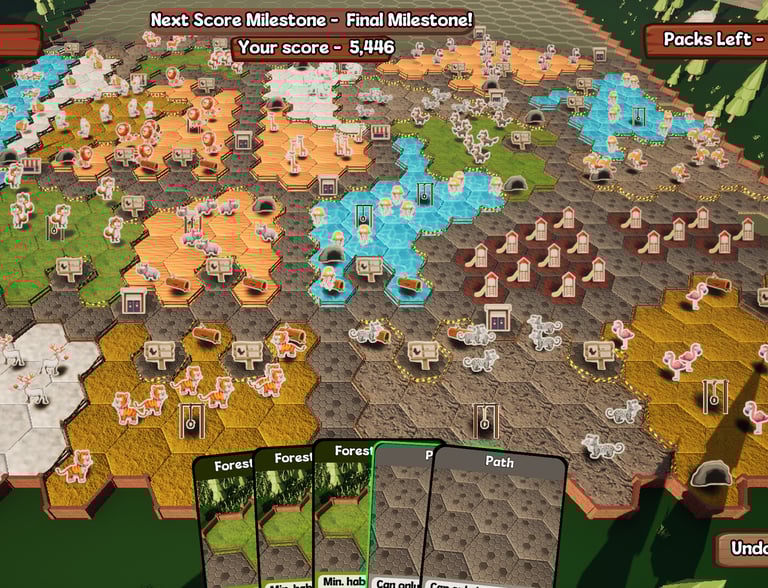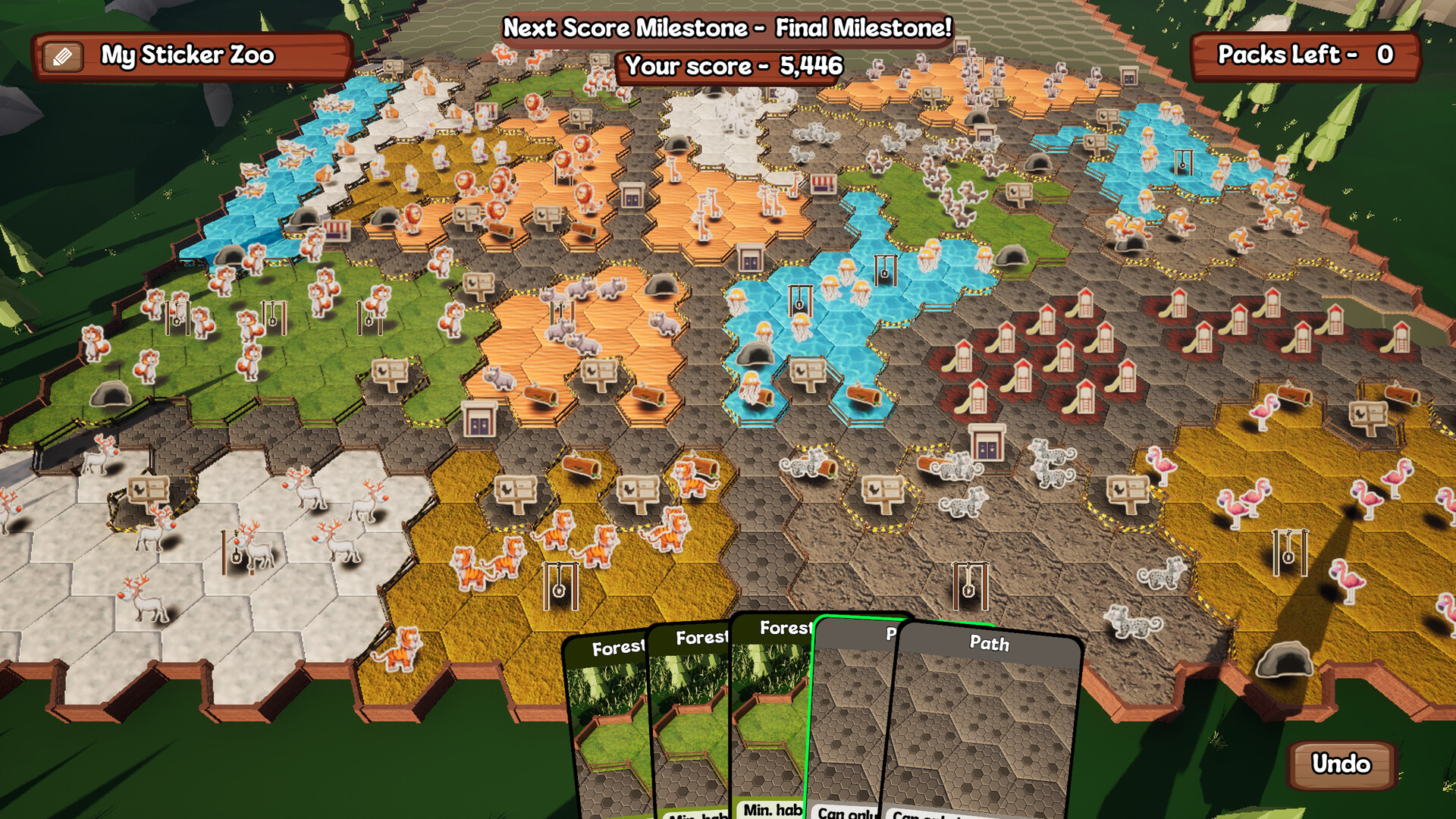
MY STICKER ZOO
My Sticker Zoo is a relaxing strategy and puzzle game where you build your own zoo. Construct impressive habitats for your sticker animals by placing tiles. Manage a variety of wildlife parks as you unlock new scenario's. Collect all the stars, set new high-scores and become an expert ranger!





16 Weeks
4 Members
Unreal Engine 5, GitHub
PROJECT ROLE
▧ Building efficiënt Zoo Animals Blueprints
▧ Design Logic and Layouts for Scenario Mode
▧ Creating the Save and Load System
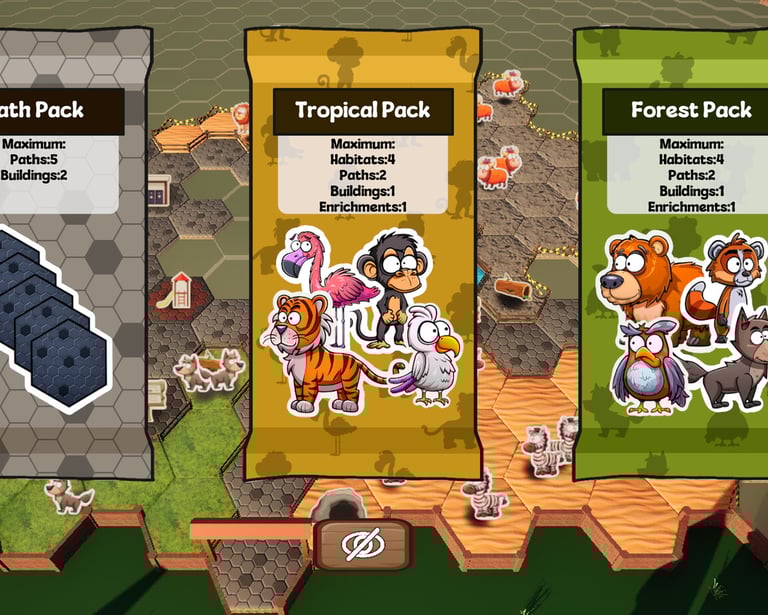
The small teamsize of My Sticker Zoo made it so that everyone had to be flexible in their project role. I stepped out of my comfort zone with doing some of the market research, 2D art (for example, the tile packs as seen on the right) and promotion. My key technical responsibilities were:
BUILDING EFFICIENT ZOO ANIMALS BLUEPRINTS
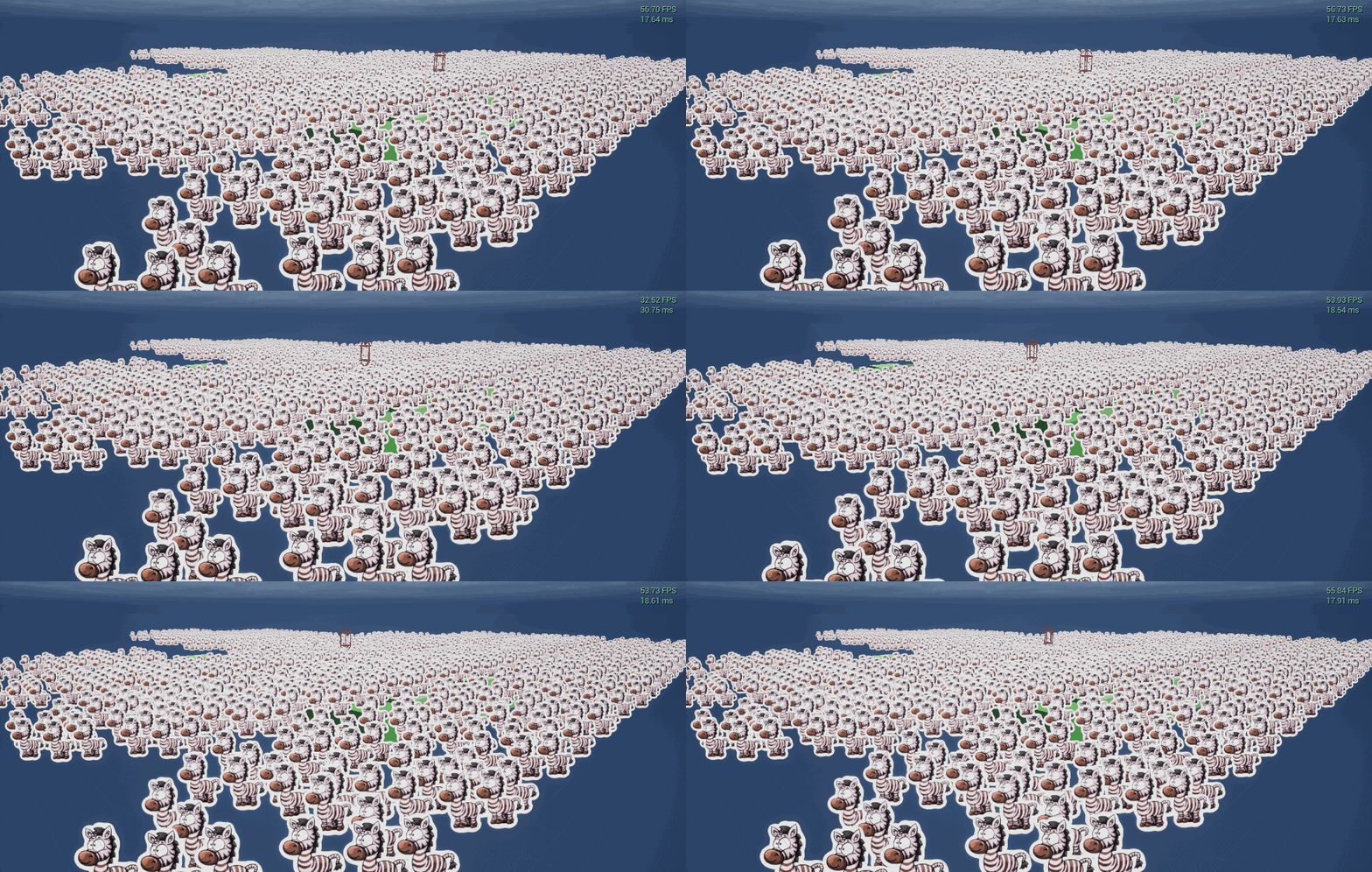
Performance Testing
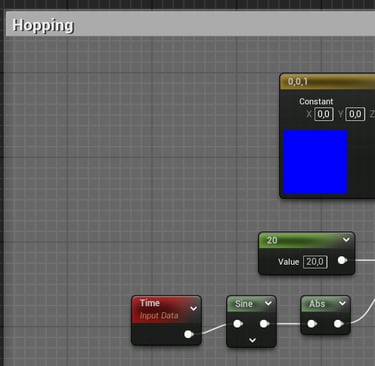
I tested the performance of this simple movement. Vertex animations easily allowed us to have hundreds of moving animals without affecting the performance in a significant way, even on budget-friendly machines.
Vertex Animation Additions
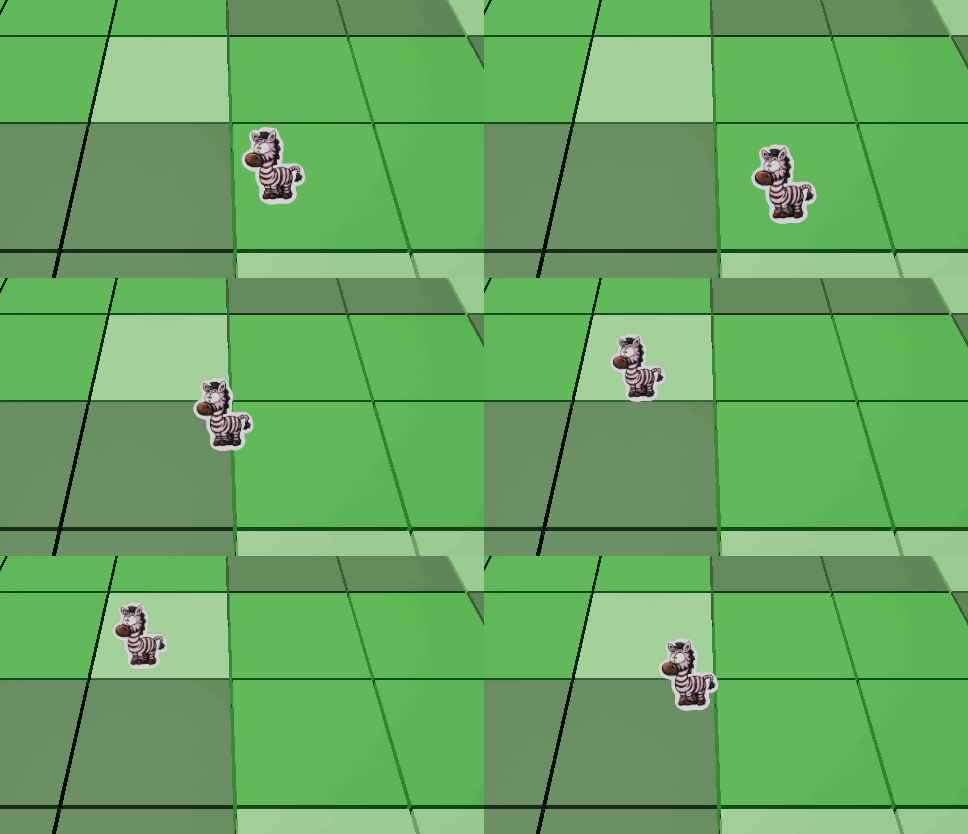
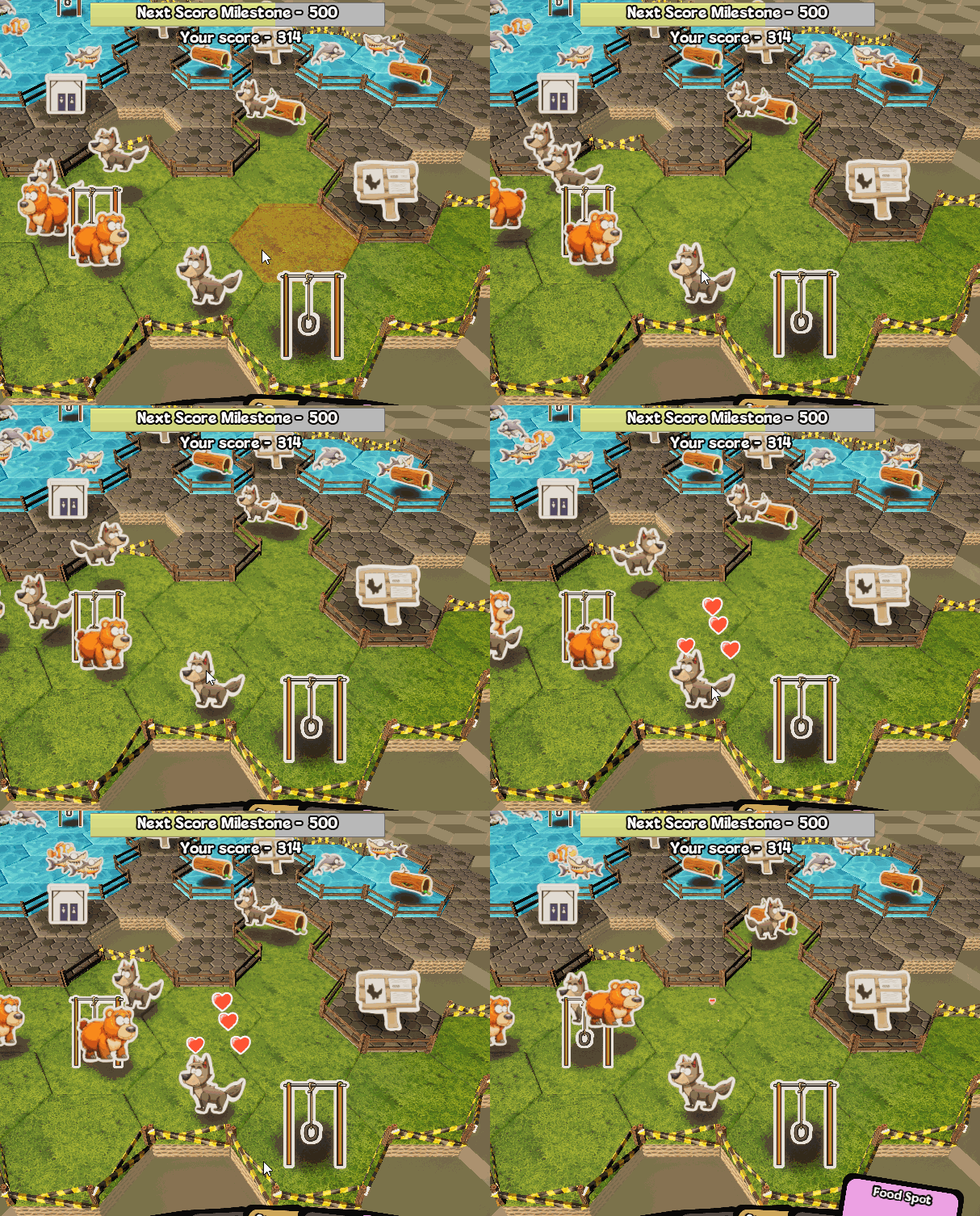
The performance was amazing, but the animation itself was still lacking in quality. The movement didn't look and feel great. I expanded on the simple hopping movement by adding additional vertex animation logic for:
▧ Stretching the sprites throughout their movement to create a more fluid hop.
▧ Animals smoothly transition from moving to idle vertex animation as time goes on.
▧ Allowing animals to face left and right based on their movement and camera direction.
▧ Giving individual animals different variables for their animation, to give them some unique flavor.
For example; Yaks move and bounce slowly, while the Monkeys go nuts!
▧ Also, Yes! You can pet the animals!
Challenges for a large amount of Animal actors
For My Sticker Zoo, we wanted players to be able have a lot different moving animals in their zoo. To achieve this goal, we had two key challenges to overcome
▧ Pressed for time and resources, we couldn't afford animations for a large amount of different animals.
▧ Having lots of moving animals on the screen could cost a lot of performance.
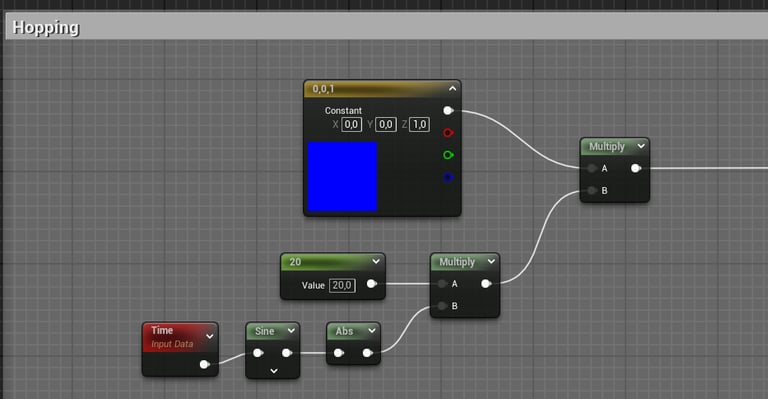
I researched methods to overcome these challenges. The potential solution that showed most promise was using vertex animations. I combined simple vertex animations with projectile movement to create a moving animal.
LOGIC AND LAYOUTS FOR SCENARIO MODE
Organized Custom Logic and Goals
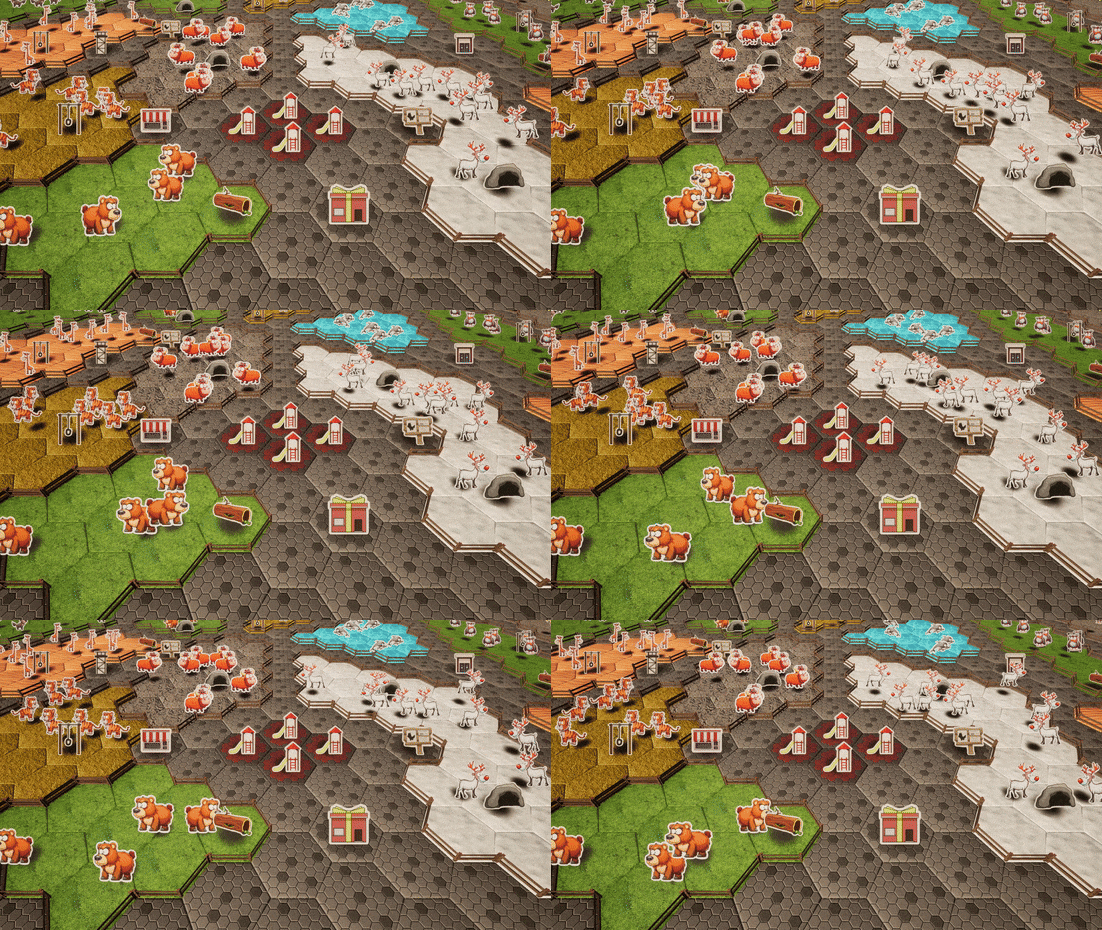
In My Sticker Zoo players can play the Sandbox and Scenario Modes. Each Scenario Mode map had their own unique challenge to them. These challenges were created through different map layouts and custom rules per scenario. I created custom rules for Scenario Mode maps that could be easily used and re-used. All the key metrics were stored in a Data Table, allowing for easy iterations and balancing after playtests.
I designed Scenario Mode map layouts that provided interesting challenges for the player, unique to each scenario.

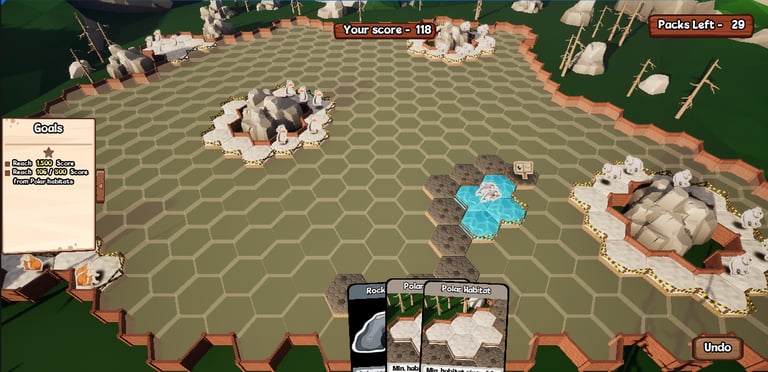
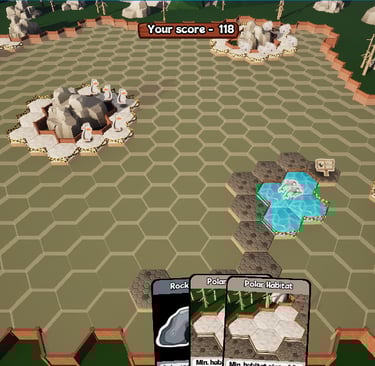
Example Scenario Map 1: Polar Peaks
This Scenario Mode Map challenges the player to use the existing layout in an efficient manner. As the player starts the map there are already some polar enclosures partially built. Players must plan ahead and enclose these tiles with their limited resources to get enough score!
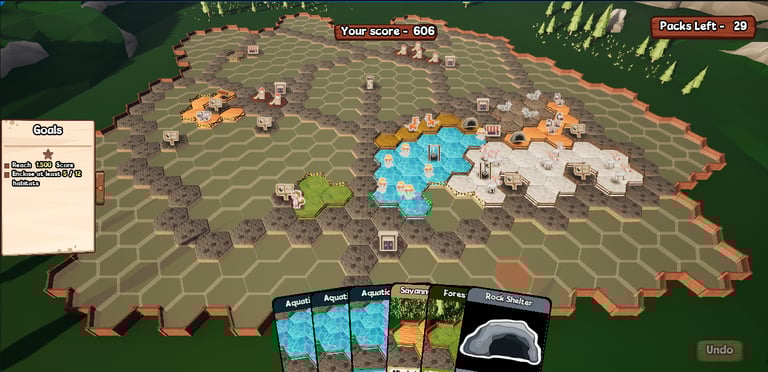
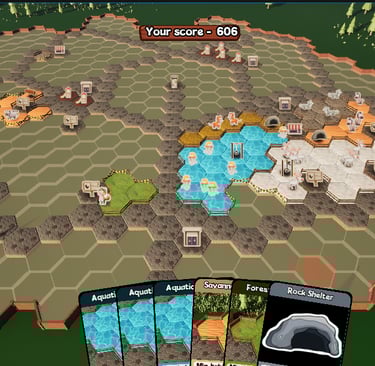
Example Scenario Map 2: Pathless Planner
In this map, players are challenged to play without one of the key tiles in My Sticker Zoo, the path tile. The map provides huge scoring opportunities to players, but only if they strategically use the bonus cards given them through the custom scenario rules!
SAVE AND LOAD SYSTEM
Saving and Loading Prototype
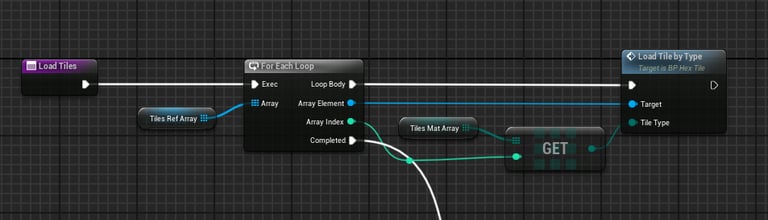
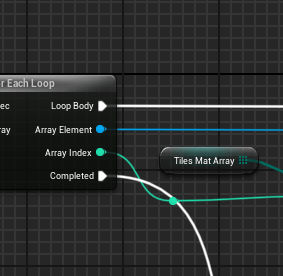
I built a system saving every tile placed to an array, and then replacing them in that same order while loading the game. At first, I was sceptical whether this would work, and have an okay performance as well. First test results showed near-instant loading times on small maps, and no critical bugs were found. Once this part worked, I added the ability to save the player cards in hand on top.
The nice thing about the save and load system was that even when we were adding new types of tiles, no new logic was needed to adapt the save and load system. As the system took the same logic from placing a tile in the first place.
Many Saves and Slots
Because of the Sandbox mode and Scenario Mode, we needed to save a lot of different individual games. In total, a player could have up to 37 different games saved. I used Unreal Engine's built-in savegame slot function to allow for many different save files.
The development of My Sticker Zoo was a cool experience. We went from concepting an idea to a full Steam release in less than 4 months with only 4 people working on the game. We got a lot of positive feedback on the simple yet strategic tile placement gameplay, which was awesome to hear!
I improved my skills as a technical designer, and learned a lot outside of the expected design practices as well. The development of My Sticker Zoo has made me excited to make more smaller games in the future.